
Tip: Activate javascript to be able to use all functions of our website
Tip: Activate javascript to be able to use all functions of our website

As of: 06/2026
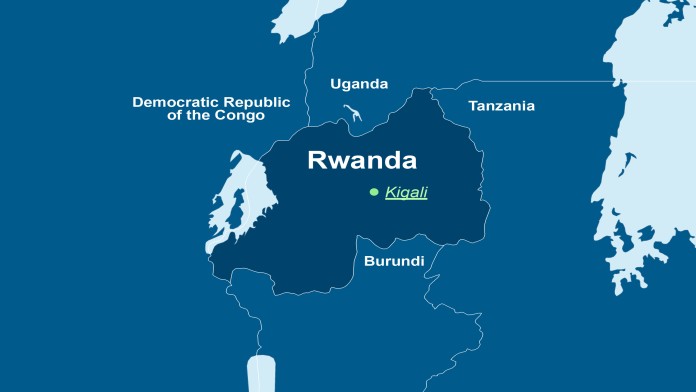
Germany is supporting Rwanda in realising its potential to adapt to climate change. On behalf of the German Government, KfW is funding the Rwanda Green Fund (RGF), which supports climate projects in Rwanda. The project forms part of the German-Rwandan Climate Partnership, which has been in place since 2022 and combines economic development with the reduction of greenhouse gas emissions and the protection of global public goods.
Rwanda is the ‘Land of a Thousand Hills’ – a description of the topography of this Central African country, which features many steep, intensively farmed slopes. At the same time, with a population density of over 500 people per square kilometre, Rwanda is one of the most densely populated countries in Africa. Despite considerable successes in recent years, Rwanda remains one of the world’s poorest countries (LDC – Least Developed Country), with a per capita GDP of around USD 1,000 (World Bank 2024).
The Rwandan government is pursuing an ambitious development path and has already made considerable progress. However, poverty remains a major problem: around 40 per cent of the population lives below the international poverty line of USD 3.00 per day. In its ‘Vision 2050’, Rwanda has set itself the goal of achieving upper-middle-income country (UMIC) status by 2035 and high-income country (HIC) status by 2050. These long-term goals require high annual economic growth averaging over 12 per cent, which is above
At the same time, Rwanda has set itself ambitious climate targets and is one of the frontrunners in the Global South. In its Nationally Determined Contributions (NDCs) 3.0, the country has committed to a 53 per cent reduction in emissions (conditional and unconditional contributions) compared with a business-as-usual scenario. This corresponds to an estimated saving of over 14 million tonnes of CO₂ by 2035.
Equally crucial is protecting the population from the negative impacts of climate change, which poses a significant threat, particularly to the rural population – which remains heavily affected by poverty – and jeopardises the achievement of development goals. Rwanda’s population and economy are highly dependent on climate-sensitive sectors, including agriculture in often topographically challenging terrain, tourism and the extraction of raw materials. According to estimates, climate risks could mean that, in the event of severe climate events, Rwanda’s GDP could fall 5–7 per cent below the expected level by 2050, thereby directly jeopardising the promising fight against poverty.
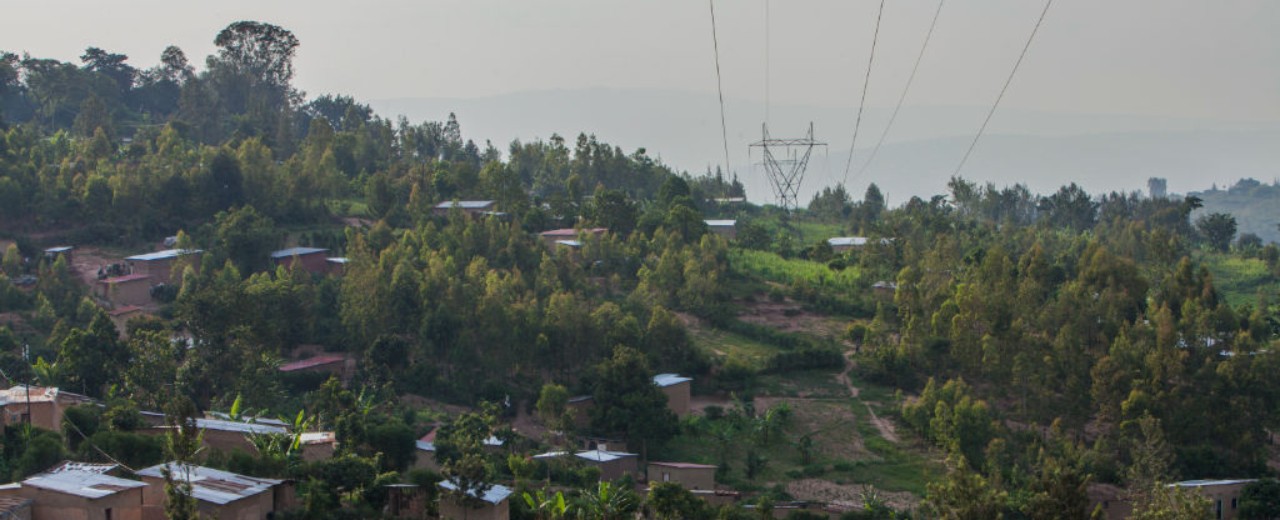
As part of the climate partnership between Rwanda and Germany, which has been in place since 2022, the Rwanda Green Fund (RGF) – the Rwandan government’s central (climate) financing vehicle – has established the so-called ‘NDC Facility’ (also known in Rwanda as ‘Intego’) with German support. The NDC Facility finances investment projects by public bodies that make a direct contribution to climate protection (reduction of greenhouse gas emissions) and, in particular, help to strengthen the resilience of poor, rural communities to the impacts of climate change (climate adaptation).
These climate projects are selected by the RGF on the basis of pre-agreed criteria and submitted to KfW for approval. The selection criteria are based, amongst other things, on Rwanda’s climate targets (NDCs). The climate projects are then implemented by the selected public applicants with the support and close guidance of the RGF and KfW. In this process, the RGF is supported by an implementation consultant, currently a consultancy firm from Germany.
The aim of Germany’s support for the NDC Facility is to help strengthen the climate resilience of the Rwandan population and to reduce greenhouse gas emissions – thereby contributing to the protection of global public goods.
In line with the BMZ strategy ‘Shaping the Future Together Globally’, the project contributes in particular to Goal 1: ‘Overcoming poverty, hunger and inequalities’. The projects funded by the NDC Facility are generally very closely tailored to the target groups and cover the full range of Rwanda’s climate-related challenges (e.g. nature-based solutions for flood protection, afforestation with local and endemic tree species, erosion control and rainwater harvesting, climate-adapted techniques in subsistence agriculture, sustainable cooking energy, etc.) and predominantly improve the living conditions of poor, particularly vulnerable population groups directly. Mitigation measures contribute to climate protection and thus to the protection of global public goods, and make an important contribution to Goal 4: ‘Strengthen strategic alliances for global solutions and the multilateral system’.
This is further supported by the fact that, alongside Germany, other European partners – namely the United Kingdom and Luxembourg – are already participating in the facility, which was established largely through German commitment.
The projects funded by the RGF will help reduce greenhouse gas emissions by in the region of 200,000 tonnes of carbon dioxide equivalents. Of this, 11,000 tonnes are to be attributable to the project financed by KfW.
The projects funded by the RGF are also intended to better protect at least half a million people from the consequences of extreme weather events.
The programme is helping to reduce the ecological footprint of Rwandan cities and create affordable housing, improving the living conditions of the population.
The project contributes to the achievement of these following United Nations Sustainable Development Goals:
KfW Group
KfW Development Bank
Country sector Sub-Saharan Africa

Share page
To share the current page content with your network, click the button below and then select the desired option in the dialog box.
Note on data protection: By clicking the button, your browser's sharing function is used. If you select an external provider when sharing, personal data may be processed by the provider. Please read our data protection principles for more information.
Your browser does not support sharing with external services.
Alternatively, you can also copy the short link: https://www.entwicklungsbank.kfw.de/s/enzBzDtD
Copy link Link copied